String Trimmer vs Edger for Danbury CT Lawn Borders
When maintaining crisp lawn borders around your Danbury property, the choice between a string trimmer and a dedicated edger often determines whether your landscape looks professionally maintained or merely cut. Both tools serve distinct purposes in lawn care, and understanding their specific applications helps you achieve the clean lines that complement western Connecticut's varied property styles.
String Trimmer Fundamentals and Applications
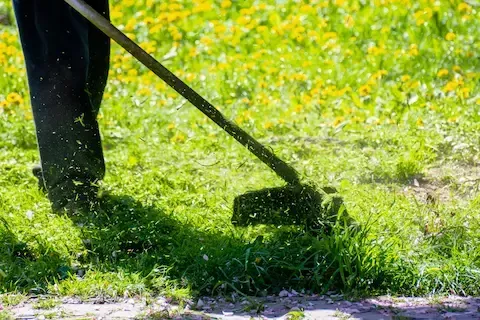
String trimmers excel at versatility and accessibility. The rotating nylon line cuts through grass and light vegetation with a sweeping motion that adapts to irregular surfaces and obstacles. For Danbury homeowners dealing with sloped areas around stone walls or uneven terrain near mature trees, string trimmers provide the flexibility to maintain grass height without the rigid requirements of wheeled equipment.
The tool's lightweight design allows extended use around extensive property perimeters common in areas like Shelter Rock and Mill Plain. String trimmers handle multiple tasks beyond basic trimming: clearing grass from fence lines, maintaining areas around outdoor furniture, and managing growth around landscape features where mowers cannot reach.
However, string trimmers create a torn cut rather than a clean slice. This cutting action works well for regular maintenance but produces less precise results along walkways and driveways where sharp definition matters most. The flexibility that makes string trimmers versatile also makes them less suitable for creating consistent, straight edges.
Edger Performance and Precision
Dedicated edgers cut with a vertical spinning blade that slices through grass roots and soil, creating defined borders between lawn areas and hardscaping. This cutting action produces the crisp lines visible in well-maintained commercial landscapes and upscale residential properties throughout Danbury's established neighborhoods.
Edgers excel along concrete walkways, asphalt driveways, and defined garden borders where precision matters. The vertical cutting action removes grass that creeps beyond intended boundaries, maintaining clear separation between lawn areas and adjacent surfaces. For properties with extensive walkway systems or formal landscape designs, edgers deliver results that string trimmers cannot match.
The limitation lies in edgers' specificity. These tools require relatively flat, stable surfaces and work best along straight or gently curved lines. Rocky soil conditions or irregular surfaces can damage edger blades and produce inconsistent results. Additionally, edgers typically weigh more than string trimmers and require more physical effort during operation.
Practical Application Scenarios
Property characteristics determine which tool produces better results in specific situations. Newer developments in Danbury with defined sidewalks and consistent grading benefit from edger precision along these formal lines. String trimmers handle the remaining detail work around plantings and irregular features.
Older properties with established landscaping often require string trimmer flexibility to navigate around mature foundation plantings and varied hardscaping materials. These properties may have fewer areas where edger precision provides significant advantage, making string trimmers the primary choice for border maintenance.
Consider seasonal factors when selecting tools. Spring edge definition after winter damage often requires edger cutting power to reestablish borders. Summer maintenance typically relies more on string trimmer versatility to manage rapid growth around obstacles and in tight spaces.
Professional landscaping services often combine both tools during property visits. Edging And Trimming work begins with edgers along primary walkways and driveways, followed by string trimmer detail work around specific features and obstacles.
Common Tool Selection Mistakes
Many homeowners assume string trimmers can replicate edger results through technique adjustments. While skilled operators achieve improved precision with string trimmers, the fundamental cutting action cannot produce the clean root separation that edgers provide. Attempting to use string trimmers for primary edge definition often results in ragged borders that deteriorate quickly.
Conversely, forcing edgers into inappropriate applications damages equipment and produces poor results. Using edgers on uneven surfaces or around obstacles leads to gouged soil, damaged blades, and inconsistent cutting depth. Understanding each tool's optimal applications prevents equipment damage and improves results.
Maintenance neglect affects both tools but manifests differently. Dull edger blades tear rather than cut, reducing effectiveness and increasing effort required. Worn string trimmer line produces similar tearing effects but remains more forgiving in varied applications.
Local Considerations for Western Connecticut
Danbury's soil conditions influence tool selection and performance. Clay-heavy soils in low-lying areas can clog edger mechanisms and require more frequent cleaning. Sandy soils in elevated areas allow edgers to cut more easily but may require depth adjustments to prevent excessive soil displacement.
Seasonal weather patterns affect tool effectiveness. Spring thaw conditions make edging more difficult until soil moisture levels stabilize. Late fall edging before ground freeze helps establish clean lines for the following growing season.
Local landscape materials also matter. Properties with natural stone borders may require string trimmer precision to avoid damage, while concrete and asphalt surfaces accommodate edger use without concern for surface damage.
Professional Integration Strategies
Most effective border maintenance combines both tools strategically. Begin with edger work along primary pathways and defined borders where precision creates the greatest visual impact. Follow with string trimmer detail work around plantings, obstacles, and irregular areas where flexibility provides better results.
Equipment investment decisions should consider property characteristics and maintenance frequency. Properties with extensive defined borders justify edger investment, while heavily landscaped areas with numerous obstacles favor string trimmer versatility. For comprehensive information about proper techniques and standards, review Lawn Edging and Trimming Standards.
Professional services typically maintain both tools and select based on specific property needs and seasonal requirements. This approach maximizes results while minimizing equipment limitations that affect overall border quality.
Making the Right Choice for Your Property
Evaluate your specific property layout and maintenance priorities when choosing between tools. Properties with formal landscaping and extensive hardscaping benefit most from edger precision along primary borders. Heavily planted areas with curved borders and numerous obstacles favor string trimmer adaptability.
Consider your physical capabilities and available maintenance time. Edgers require more effort and produce faster results in appropriate applications. String trimmers offer easier handling but require more time to achieve comparable precision in suitable conditions.
Budget considerations often favor string trimmers for their versatility and lower initial cost. However, properties requiring frequent edge definition may justify edger investment for improved efficiency and superior results along formal borders.
