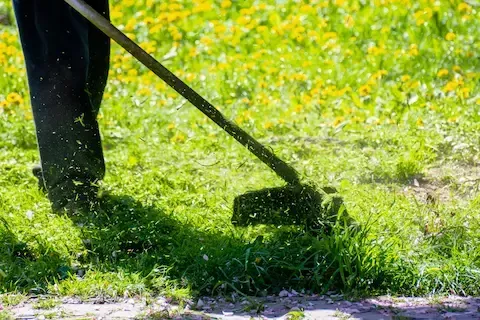
Lawn Edging and Trimming Standards for Danbury CT Yards
A well-mowed lawn can still look unkempt if the edges are ragged. In Danbury, CT, where neighborhoods range from tight residential lots near downtown to larger properties out toward the Ridgefield town line, the finishing work — the edging along driveways, the trimming around fence posts and tree rings, the clean border between turf and pavement — is what separates a maintained yard from a truly sharp one. This guide covers the practical standards for lawn edging and trimming specific to western Connecticut conditions, including soil type, seasonal timing, grass species, and the kinds of obstacles that show up in a typical Danbury yard.
Why Edging and Trimming Are Separate Tasks
Many homeowners use "edging" and "trimming" interchangeably, but they describe two different operations. Edging creates a defined, vertical cut along hard surfaces — sidewalks, driveways, patio slabs, and curbing. Trimming, by contrast, is the work of cutting grass in areas your mower deck can't reach: tight spaces around fence posts, tree bases, garden beds, mailbox posts, utility covers, and along foundation plantings.
Both tasks matter, but they demand different tools and techniques. A rotary string trimmer can handle both jobs in a pinch, but dedicated edging — either with a stick edger or a trimmer held vertically — produces a cleaner, more durable result along hard surfaces. For most Danbury properties, a combination approach works best: stick edging for driveways and sidewalks, string trimming for everything else.
Edging Standards Along Hard Surfaces
A proper edge along a concrete or asphalt surface should be a clean vertical cut, typically three-quarters of an inch to one inch deep. This depth is enough to define the border clearly without cutting into the surface substrate or creating a trench that collects debris and retains water. In Danbury, where freeze-thaw cycles through November to March can heave pavement and shift concrete slabs, excessively deep trenches along edges can accelerate cracking at the pavement border.
The edge itself should follow the natural line of the pavement, not the overgrowth of grass that has crept over it. In many established Danbury yards — particularly older properties in the Elmwood or Newtown Road corridors — years of mowing without edging can leave a grass shelf that extends two or three inches over the pavement. Restoring that border requires a deeper initial cut and often some cleanup of the accumulated soil and thatch along the channel.
Once the border is established, weekly maintenance edging is much lighter work. The goal shifts from restoration to maintenance: a quick vertical pass to remove the new growth that pushes back over the line between mowing sessions.
Walkway Transitions and Defining Turf Borders
Walkway transitions deserve particular attention because they're often the most visible edging in your yard. A clean line along a front walkway signals that the rest of the property receives the same standard of care. In Danbury's older neighborhoods — Wooster Heights, Aunt Hack Road, the streets around Rogers Park — many homes have original concrete walks with expansion joints that collect soil, moss, and creeping grass. Keeping these transitions clean involves not just edging the turf border but occasionally removing plant material from the joints themselves.
For curved walkways or informal stone paths, the edging approach changes slightly. String trimmer edging along irregular surfaces requires a steady hand and consistent angle — typically holding the trimmer so the cutting head is parallel to the border, keeping the guard side toward the hard surface. Rotary blade edgers work best on straight runs; for curves, a string trimmer with a vertical technique gives you more control.
Garden bed borders that don't have a hard surface defining them — informal grass-to-mulch transitions — benefit from a manual half-moon edger or a spade cut. These beds are common in Danbury properties with established landscaping, and keeping a defined line between turf and mulch prevents grass from colonizing bed space over the growing season.
Trimming Standards for Obstacles and Tight Spaces
Trimming is where most of the time gets spent on a typical Danbury yard. Properties here often include mature trees, chain-link fencing, raised garden beds, utility boxes, and low-clearance decking — all of which create trimming work that a mower simply can't address. Proper trimming technique keeps grass at the same height as the mowed lawn, avoids scalping, and protects structures from string contact damage.
Around trees, trimming should maintain the same height as the surrounding turf without creating a scalped ring at the base. Scalping — cutting too close and removing the surface layer of grass and soil — weakens grass around root zones and creates an entry point for weeds and pest pressure. In Danbury's clay-heavy soils, scalped areas near tree bases can also compact quickly and become bare spots by midsummer.
Fence lines are another common trimming challenge. Chain-link and wood fences both create a narrow zone where the mower can't pass. String trimming along fence lines requires consistent height control and care around wooden post bases, where excess contact from a spinning trimmer line can introduce moisture and speed rot over time.
For professional-level results, consider the Edging And Trimming service options available for Danbury properties — having consistent technique applied weekly is often what keeps a yard looking sharp between full mowing visits.
Seasonal Timing for Danbury CT Lawns
Edging and trimming frequency follows the growth rate of your grass, which in western Connecticut shifts considerably across the calendar year. Cool-season grasses — Kentucky bluegrass, tall fescue, and perennial ryegrass, which dominate most Danbury yards — have two distinct growth peaks: a vigorous spring flush from late April through June, and a secondary growth period in early fall, typically mid-August through October.
During peak growth windows, weekly edging and trimming is the appropriate standard. Growth rates can exceed an inch per week during a warm, wet May in Fairfield County, meaning edges that were sharp after a Monday visit can look shaggy by Friday. Skipping a trimming pass during peak growth doesn't just affect appearance — it allows grass to re-establish over pavement edges and along bed borders, adding restoration work to the next visit.
In midsummer, especially during heat stress periods in July and August when Danbury regularly sees temperatures above 85°F, cool-season grass growth slows significantly. At this point, edging and trimming frequency can often extend to every ten to fourteen days without visible quality loss. However, don't abandon the schedule entirely — late summer weeds fill in fast, and edges that have been neglected for three weeks are noticeably harder to restore.
Fall is the second most important edging season. Grass that grows vigorously in September and October tends to push over pavement edges quickly, and keeping clean borders through the fall ensures you're not starting spring with overgrown lines to restore before the season even starts. For a deeper look at which grass varieties drive this seasonal behavior, the Cool-Season Grass Picks guide covers the specific cultivars suited to Danbury's climate and soil conditions.
Common Edging and Trimming Mistakes in Western CT Yards
Several recurring mistakes undermine edging and trimming quality on Danbury properties. Understanding them helps you evaluate whether current maintenance is actually meeting the standard you're aiming for.
Over-edging too deep. Particularly common during spring restoration, cutting a trench that's two or more inches deep along a sidewalk creates a drainage channel that collects leaf debris in fall and ice in winter. It also weakens the turf root zone near the edge. The target is a clean, defined vertical cut — not a moat.
Trimming at inconsistent heights. When trimming speed varies or the angle of the head changes, the result is a patchy look along fence lines and around trees — some areas scalped, others left long. Consistent tool angle and walking speed are the main technical controls here.
Ignoring clipping management. Trimming near driveways and walkways sends clippings onto hard surfaces. Blowing or sweeping these off after each visit prevents staining on concrete and keeps the finished result looking complete. Many Danbury homeowners notice that the final blowdown — clearing clippings from pavement surfaces — has as much visual impact as the edging itself.
Skipping edging during shoulder seasons. Early May and late October are when edging is most often skipped because full mowing feels like enough. These are actually two of the most important edging windows, because spring growth establishes new borders and fall edging sets up a clean starting line for next year.
Equipment Considerations for Danbury Properties
For homeowners maintaining their own yards, the choice between a stick edger and a string trimmer for edging work depends largely on the property type. Stick edgers — rotary blade edgers with a fixed cutting wheel — produce the cleanest results on straight concrete runs and are easy to control for uniform depth. They're ideal for the long, straight driveway borders common on mid-century Danbury properties.
String trimmers with a vertical technique are more versatile for irregular lots, particularly properties in hillier sections of northern Danbury or near Candlewood Lake where curved walkways and informal bed edges are common. Battery-powered equipment has improved significantly and handles most residential edging without the cord management or exhaust concerns of older gas equipment.
For commercial-grade results, the blade and line gauges on professional equipment run at higher RPMs and apply more consistent torque — the difference in result quality between a homeowner string trimmer and professional equipment becomes most visible in tight restoration work or along longer straight runs where line deflection becomes a factor.
Maintaining Quality Standards Week to Week
Consistent edging and trimming across the full season is primarily a scheduling and attention discipline. The technical skill involved isn't high, but the willingness to do the full task on every visit — rather than cutting the mowing close to the curb and calling it done — is what produces a noticeably different result over a full season.
For Danbury homeowners evaluating their current lawn care approach, the most useful benchmark is simple: stand at your front property line and look toward the house. If you can't see a clean defined edge between turf and the walkway or driveway, the trimming and edging standard isn't being met. If it's visible, crisp, and consistent, the work is doing what it should — making the entire lawn look more intentional, regardless of what the grass itself is doing that week.
