Storm Debris Cleanup Steps for Danbury CT Homeowners
After a storm hits Danbury, CT, clearing your yard safely requires a specific sequence. Start by surveying the damage from a distance before touching anything. Check for downed power lines, leaning trees, and structural hazards near your home. Once you confirm the area is safe, work from large debris to small — removing branches first, then smaller sticks, and finally leaves and scattered material. Bag or tarp debris for curbside pickup or haul-away. Western Connecticut storms, especially nor'easters and summer wind events, can leave significant yard damage that requires methodical clearing to avoid injury or property damage.
Step 1: Conduct a Safe Perimeter Walk
Before you move a single branch, walk the full perimeter of your property from a safe distance. Look up, not just down. Identify any branches hanging overhead — called widow-makers — that could fall while you are working below. Check for downed utility lines touching the ground or draped over trees and fences. If you see any downed lines in Danbury, call Eversource immediately and keep everyone away from the area. Do not assume a line is de-energized. Note any leaning trees, fence damage, or debris resting against your home's foundation or siding before you begin physical cleanup.
Step 2: Clear Large Branch Debris First
Work top-down and large-to-small. Large fallen limbs are your first priority because they create tripping hazards and block access to the rest of the yard. Use loppers or a hand saw for branches under four inches in diameter. For anything larger, use caution — large limbs under tension can spring when cut. If a branch has fallen across a fence, structure, or another tree, do not cut it without understanding how the weight is distributed. A pinched saw blade or a limb that kicks back causes serious injury. Stack cut branches in a single pile near your curb or driveway for easier removal.
Step 3: Remove Mid-Size Sticks and Twigs
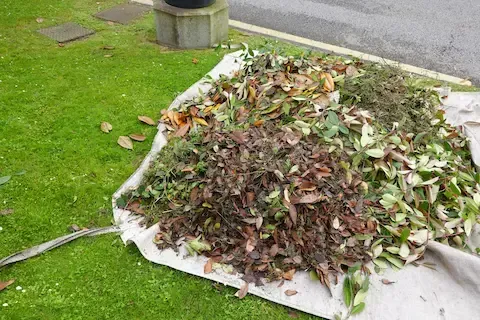
Once large limbs are cleared, move to mid-size sticks and twigs scattered across your lawn and garden beds. These are best collected by hand or raked into piles. Work in rows across your yard so you cover the entire area systematically. Danbury's hilly terrain means debris tends to collect against slopes, fence lines, and landscaping borders — pay extra attention to those low-lying areas. Collect sticks into paper lawn bags or pile them on a tarp for dragging to the curb. Avoid using plastic bags for organic debris if your municipality requires composting-compatible disposal.
Step 4: Rake and Bag Leaf and Fine Debris
After sticks are removed, rake leaves, bark fragments, and small organic material. Storm-deposited leaves are often wet and heavy, so use a sturdy rake and do not overfill bags. A bag of wet leaves can weigh over 50 pounds and may split at the seams or cause back strain. Work with the slope of your yard where possible, raking downhill into piles. For Debris Cleanup on larger properties or after severe wind events, using tarps to drag piles rather than carrying bags across the yard saves significant time and effort.
Step 5: Inspect Garden Beds and Drainage Areas
Storm debris in garden beds and along drainage channels causes problems that show up weeks later. Debris packed into beds holds moisture, promotes mold, and can smother perennials before they recover. Clear garden beds by hand to avoid disturbing plant roots. Along drainage swales and storm drains — common in Danbury neighborhoods near Still River or lower-elevation streets — debris blockages can cause water to back up onto lawns and foundations during the next rain event. Remove any leaves, sticks, or mud deposits from drainage paths before calling the cleanup complete.
Step 6: Document Damage Before Final Cleanup
If the storm caused visible damage to structures, fencing, or mature trees, photograph everything before removing debris. Homeowner's insurance claims often require documentation of the damage in its original state. Take wide shots showing the overall scene and close-up shots of specific damage points. Note the date and time of each photo. This step is particularly important for Danbury homeowners who experienced the type of wind damage associated with nor'easters or the isolated microbursts that move through Fairfield County and affect neighborhoods from Shelter Rock Road to Padanaram without warning.
Step 7: Arrange Debris Disposal or Haul-Away
Danbury Public Works typically coordinates curbside brush pickup after major storm events, but scheduling and eligibility can vary by neighborhood and storm severity. Check the City of Danbury's official announcements for scheduled pickup dates. For large volumes of debris or when curbside pickup is not available on your timeline, private hauling is the practical option. You can also review Yard Debris Cleanup Standards to understand what material is accepted for standard debris removal versus what requires special disposal. Keep debris piles off the roadway and away from storm drains while waiting for pickup.
