Fall Cleanup Roadmap for Danbury CT Property Owners
Autumn in Danbury hits fast. One week you're watching leaves turn along the Housatonic watershed, and the next you're staring at six inches of wet oak leaves matted across your lawn. For property owners in western Connecticut, fall cleanup isn't a single Saturday project—it's a coordinated sequence of tasks that, done in the right order, protects your lawn through winter and sets up spring for a strong start. This guide walks you through that sequence so nothing gets skipped and nothing gets done twice.
Why Sequence Matters More Than Speed
Most homeowners approach fall cleanup reactively—raking leaves when they pile up, cutting grass when it looks long, blowing out irrigation when they remember. That piecemeal approach leads to wasted effort. If you aerate before you dethatch, you're forcing tines through a mat that should have been lifted first. If you trim ornamental grasses before the first frost, you stimulate late growth that winter will kill. The order of operations is the plan, and getting it right in Danbury's specific climate zone matters more than how quickly you execute.
Danbury sits in USDA Hardiness Zone 6a, which means first frost typically arrives between mid-October and early November. That window is your planning anchor. Work backward from expected first frost and you'll know when each task needs to start.
Step One: Final Lawn Assessment Before Leaves Drop
Before the canopy comes down, walk your property and catalog what the season left behind. Look for bare patches from summer foot traffic or drought stress, grub damage that shows up as spongy or lifted turf sections, and areas where thatch has built up. This assessment determines what your lawn actually needs this fall—not what a generic checklist says.
In Danbury neighborhoods like Aunt Hack, Padanaram, and the areas around Tarrywile Park, soil compaction is common because of heavy clay content in the glacial till that underlies much of the region. If your lawn feels dense underfoot or water puddles after rain rather than absorbing, compaction is your starting problem and aeration is your first mechanical task.
Step Two: Dethatching and Aeration
Thatch is the layer of dead grass stems and roots between the green blades and the soil surface. A thin layer under half an inch is normal and even beneficial. Anything thicker blocks water, fertilizer, and oxygen from reaching roots. If your thatch reads at three-quarters of an inch or more when you pull a plug of turf, dethatch before you aerate.
Core aeration follows. A core aerator pulls small plugs from the soil, opening channels for air and water exchange. For compacted clay-heavy Danbury soils, two passes in perpendicular directions gives better coverage. Leave the plugs on the surface—they break down within a few weeks and return organic matter to the lawn. Aeration is most effective in early fall, while soil temperatures are still warm enough for grass roots to recover before dormancy sets in.
Step Three: Overseeding and Fall Fertilization
Immediately after aeration is the best possible window for overseeding cool-season grasses like tall fescue and Kentucky bluegrass, which dominate most Danbury lawns. Seed falls into the aeration holes and makes direct contact with soil rather than sitting on top of thatch. Germination rates improve dramatically. Keep newly seeded areas moist for two to three weeks until seedlings establish.
Fall fertilization follows within a few days of overseeding. Use a slow-release nitrogen formula with higher potassium content—often labeled as a winterizer. Potassium strengthens cell walls and improves cold hardiness. In Connecticut, fall fertilizer applied too late (after the ground freezes) runs off and contributes to waterway nutrient loading, so time it appropriately. Danbury's proximity to the Still River and several reservoir tributaries makes timing especially relevant from both an environmental and a regulatory standpoint.
Step Four: Leaf Removal in the Right Order
This is where most fall cleanup effort actually goes. Danbury's tree canopy is dense—mature oaks, maples, and sweetgums drop heavy loads across a long season from late September through early December. Managing that volume requires a system, not just a rake.
Start leaf removal before leaves reach maximum depth. Light, dry leaves are faster to move and less likely to mat. Mulch-mowing in early fall is efficient: a mower with a mulching blade breaks leaves into fragments that decompose quickly and add organic material to the lawn. This works well until leaf volume exceeds what a mower can process—usually when leaves cover more than half the turf surface at a time.
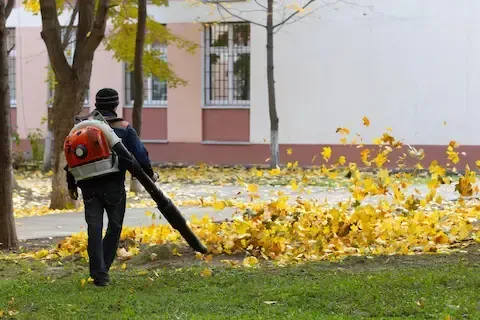
Once leaf volume surpasses mulch-mowing capacity, switch to blow-and-collect. Backpack blowers concentrate leaves into windrows along bed edges or property lines, then a vacuum or tarp system collects and bags them. For large properties with significant oak coverage, multiple passes over several weeks are more effective than one massive end-of-season push. Wet, matted leaves are harder to move, heavier, and more likely to smother grass.
If you're thinking about what to do with collected leaves rather than hauling them to the curb, Composting Yard Waste Legally covers how Danbury residents can handle organic material responsibly under local guidelines.
Step Five: Garden Bed Preparation
Planting beds need attention after leaf removal but before the ground freezes. Cut back herbaceous perennials that are fully dormant—hostas, daylilies, coneflowers, and most ornamental grasses. Leave seed heads on native species like black-eyed Susan and Joe-pye weed if you're supporting overwintering insects, but remove diseased material entirely so it doesn't harbor pathogens through winter.
Tender bulbs like dahlias, cannas, and elephant ears need to come out of the ground before a hard freeze. Cure them in a dry space and store in peat or vermiculite through winter. Hardy bulbs—tulips, daffodils, alliums—go into the ground in October for spring bloom. The window for bulb planting in Danbury typically runs from mid-October through mid-November, before soil temperatures drop below 40 degrees.
Apply a two-to-three-inch layer of shredded hardwood mulch or composted leaf material to beds after cutting back perennials. This insulates root zones through freeze-thaw cycles that are common in Fairfield County winters and reduces soil erosion during winter rains.
Step Six: Shrub and Tree Care
Fall is not the time for heavy pruning of most shrubs—late pruning stimulates new growth that won't harden off before cold arrives. Limit pruning to dead or crossing branches and anything that poses a safety concern. Exception: shrubs that bloom on new wood, like butterfly bush and certain hydrangea varieties, can be cut back in late fall without affecting next year's bloom.
Young trees and thin-barked species like ornamental cherries and crabapples benefit from trunk wraps applied in late fall to prevent sunscald, which happens when late-winter sun heats bark during the day and rapid nighttime refreezing causes the outer layer to crack. Danbury's variable late-winter temperatures make this a real risk, particularly on south-facing exposures.
Check trees for hanging dead limbs—called widow-makers—before the first significant snowfall. Heavy, wet snow is common in western Connecticut in November and December, and overhead hazards become projectiles. An arborist assessment for large trees on your property is worth scheduling before late fall.
Step Seven: Irrigation Winterization and Hardscape
Irrigation systems in Danbury need to be blown out before the ground freezes, typically in October. Compressed air forces residual water from laterals and heads—any water left in the system will expand when it freezes and crack fittings, heads, and in severe cases, valve manifolds. Schedule blowout before the first hard freeze, not after.
Walk your hardscape while you're at it. Inspect patios, walkways, and retaining walls for heaved pavers or cracked mortar. Small gaps allow water infiltration that freeze-thaw cycling widens dramatically over winter. Sealing cracks in the fall prevents expensive structural repairs in spring.
Step Eight: Final Mowing Height and Lawn Dormancy
The last mowing of the season should bring your lawn to a height of about two and a half to three inches—shorter than summer height. Tall grass going into winter mats down under snow cover and creates habitat for snow mold fungi, which can damage turf during long periods of snow cover. Danbury's elevation and proximity to the Berkshire foothills means more persistent snow cover than coastal Fairfield County, so managing final mowing height matters here.
Do not scalp the lawn. Cutting too short going into winter removes the carbohydrate reserves stored in grass blades and reduces cold hardiness. The goal is managed height, not bare ground.
Planning the Work Around Danbury's Calendar
The practical reality for most Danbury homeowners is that fall cleanup runs from late September through mid-November, compressed into weekends around other obligations. Prioritize tasks by their weather sensitivity: aeration and overseeding need warm soil, leaf removal needs dry conditions, irrigation blowout needs to happen before a freeze. Everything else has more flexibility.
For properties with significant tree cover, mature landscaping, or large lawn areas, the volume of fall cleanup work often exceeds what a single household can manage in the available window. If you're evaluating your options, our Fall Cleanup services cover the full scope of tasks described here, from leaf removal through bed prep and final lawn care, scheduled around Danbury's actual seasonal conditions.
What Skipping Steps Actually Costs You
Leaves left on lawns through winter kill grass by blocking light and oxygen and encouraging fungal disease. Unprotected irrigation systems that freeze cost far more to repair than a blowout appointment. Beds without mulch lose perennials to heave damage that a two-dollar bag of mulch would have prevented. The cost of skipping fall cleanup isn't visible until April—by which point you're looking at a lawn that needs significant remediation instead of a spring tune-up.
Danbury's winters are real winters. The cleanup you do in October and November directly determines what your property looks like the following May. The sequence in this guide is built around that reality, using the actual climate conditions, soil characteristics, and seasonal timing of western Connecticut rather than generic national advice. Work through it in order and your property goes into winter ready.
