Branch and Limb Cleanup After Danbury CT Wind Storms
Wind storms move through Fairfield County fast, and Danbury's landscape—with its mix of mature oaks, maples, and pines on hilly terrain—means downed branches and scattered limbs are a common aftermath. Whether it's a brief but violent thunderstorm in July or a nor'easter pushing through in November, the debris that lands in your yard ranges from manageable to genuinely dangerous. Knowing how to approach the cleanup systematically will protect your property, your lawn, and anyone walking through the yard.
Assessing the Yard Before You Touch Anything
Before you pick up a single branch, walk the full perimeter of your property and look up. Storm debris doesn't always fall cleanly to the ground. In Danbury's wooded neighborhoods—especially around Tarrywile Park, Briar Ridge, and the King Street corridor—large limbs often hang partially broken in the canopy. These are called widow-makers for a reason. A limb that looks like it landed is sometimes still suspended by bark or neighboring branches, held by tension that releases the moment something below it shifts.
Look for:
- Branches resting in tree crowns or against utility lines
- Splits at the trunk where a limb tore partially away
- Leaning trees that may have root damage below grade
- Debris on your roof or caught in gutters
- Any limb within ten feet of overhead power lines
If you see anything touching or near power lines, call Eversource before starting any cleanup nearby. Do not attempt to pull those branches down yourself.
Sorting Debris by Size and Handling Method
Once you've done your safety walk and confirmed the yard is clear of immediate hazards, sorting your debris into categories will make the entire process faster and more efficient.
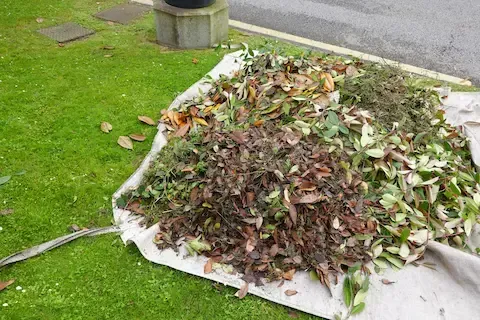
Small twigs and leaf clusters — anything under an inch in diameter — can be raked into piles and bagged or collected on a tarp. These are lightweight and present no structural risk. In most Danbury neighborhoods, you can bag small debris for standard yard waste collection or pile it at the curb depending on what the City of Danbury's current post-storm collection schedule allows.
Mid-size branches — roughly one to four inches in diameter — are manageable for most homeowners with a handsaw or loppers. The key is cutting them into consistent lengths, typically four feet or under, and bundling them if required for curbside pickup. Check the City of Danbury Public Works guidelines after a storm event, as they sometimes expand collection windows and acceptable pile sizes following major weather.
Large limbs and trunk sections — anything over four inches in diameter — require a chainsaw and, more importantly, the training to use one safely. If a large limb came down on a fence, a garden structure, or near the foundation, don't try to cut it yourself unless you have real experience. Tension in a pinned limb can cause a saw to kick back or the wood to shift suddenly.
Staging Debris for Pickup or Hauling
Where you pile your storm debris matters. Avoid placing large piles across storm drains, sidewalks, or in ways that block sight lines for vehicles pulling out of driveways. In Danbury's older neighborhoods—particularly around Wooster Heights and downtown—the streets are narrower and curb piles can create real traffic hazards if they're not staged correctly.
Keep brush and woody debris separate from bagged material and separate from any construction debris if storm damage led to structural repairs. Mixing material types can cause an entire pile to be rejected during collection. If you're planning a private haul rather than waiting for municipal pickup, consolidating debris near your driveway apron makes loading significantly easier.
For ongoing Debris Cleanup needs beyond a single storm event, professional services can handle not just the removal but also the sorting and hauling logistics, which saves you multiple trips to the transfer station.
When to Stop DIY and Call a Professional
There's a line between cleanup and tree work, and crossing it without the right equipment puts you at real risk. Professional help is warranted when:
- Any part of a fallen limb is still attached to the tree above
- A branch landed on a structure, fence, or vehicle
- You're working on a slope where footing is compromised
- The debris requires a chainsaw and you don't use one regularly
- The volume of material exceeds what you can reasonably move in a day
After a significant storm, Danbury sees a surge in demand for cleanup crews. Scheduling sooner rather than later means you're less likely to wait a week or more before anyone can get to you. A qualified crew will assess hanging hazards, handle large limb removal safely, and clear your yard in a fraction of the time it would take on your own.
Lawn Recovery After Storm Debris Is Removed
Once the branches are cleared, turn your attention to what the debris did to your lawn. Heavy limbs can mat down and smother grass, especially if they sat for several days after the storm. Raking out the flattened areas and aerating compacted spots will help the turf recover faster.
Watch for areas where bark, sap, or crushed leaves were sitting directly on the grass. These can create conditions for fungal issues, particularly in Danbury's wetter fall months. If the damage is extensive, overseeding in late September or early October can help fill in bare patches before the ground freezes.
Understanding broader Yard Debris Cleanup Standards can help you set a baseline for how your property should look after any cleanup event, not just storm recovery.
Working With What Danbury Throws at You
Fairfield County gets its share of severe weather, and Danbury's elevation and tree density mean wind events can be harder on residential properties here than in lower-lying parts of the region. Building a practical post-storm routine—assess first, sort by size, stage debris correctly, and know when to call in help—makes each cleanup faster and safer than the last. Your yard can recover fully from most wind events with the right approach and the right timing.
