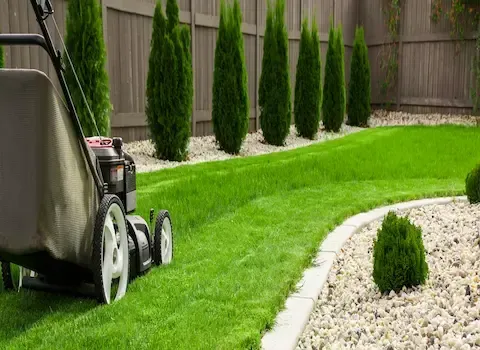
When To Schedule Your First Spring Mow in Danbury CT
Danbury winters don't ease off gently. Between freeze-thaw cycles on the hills off Padanaram Road and late-season snow events that push well into March, your lawn spends months under stress before it ever sees a mower blade. That backstory matters when you're deciding when to cut for the first time in spring. Move too early and you compact soil that's still saturated, scalp grass that hasn't recovered from dormancy, or set up shallow root development that will hurt you in July. Get the timing right and your turf comes out of spring strong, dense, and ready to handle a Connecticut summer.
Why Timing the First Mow Is Different From Every Other Mow
Your lawn in late March or early April is not the same lawn you mowed last October. Cool-season grasses like the Kentucky bluegrass, tall fescue, and perennial ryegrass common across Danbury lawns are just beginning to wake up. The root system is still fragile. Crowns — the growing point at the base of each grass plant — are exposed and tender. Soil moisture is high from snowmelt and spring rain. Every one of those factors changes how your mower interacts with the turf, and all of them argue for patience.
The first mow of the season also sets the tone for the rest of the year. A clean, properly timed cut encourages lateral growth, thickens the canopy, and reduces early-season weed pressure. A rushed cut does the opposite — it opens the canopy, stresses recovering plants, and gives opportunistic weeds like crabgrass a foothold before the turf can compete.
Soil Readiness: The First Signal To Check
Before you look at grass height, look at the ground. Walk across your lawn in a part of the yard that gets full sun. If your footprints sink and leave a clear impression, the soil is too wet to mow. Mowing on saturated soil does two things you don't want: it compacts the ground beneath your mower's wheels, restricting root oxygen exchange for weeks afterward, and it tears rather than cuts the grass, leaving ragged ends that brown and invite disease.
In Danbury, north-facing slopes and low spots near seasonal drainage areas — common in neighborhoods like Shelter Rock and along the Route 6 corridor — stay wet significantly longer than open, south-facing yards. Don't judge your whole lawn by the driest corner. Walk the wet areas. When your footprints stop leaving impressions, the ground is ready.
Grass Height: The Second Signal To Watch
Once the soil passes the footprint test, shift your attention upward. The standard guideline is to mow when your grass reaches about one-third more than your target mowing height — not before. For most Danbury lawns, a healthy summer mowing height sits between 3 and 3.5 inches. That means you're looking to make your first cut when the grass reaches roughly 4 to 4.5 inches.
If you mow shorter than that on the first pass, you're cutting into growth the plant hasn't fully produced yet. If you let it go significantly longer before cutting — say, 6 or more inches — you'll shock the plant by removing too much leaf area at once. Neither outcome is good. The goal is a measured, conservative first cut that removes excess growth without stressing the plant.
For Lawn Mowing that follows these principles across the full season, local crews familiar with Danbury's soil conditions and cool-season grass types will calibrate cut height and timing to what your lawn actually needs rather than a fixed calendar schedule.
Temperature and Growth Rate as Confirming Signals
Soil and grass height tell you most of what you need to know, but daytime high temperatures add useful confirmation. Cool-season grasses begin active growth when soil temperatures consistently reach around 50°F. In Danbury, that typically happens somewhere between late March and mid-April depending on the year, with late-season cold snaps sometimes pushing that window back toward late April.
You don't need a soil thermometer to estimate this. A sustained run of daytime highs in the upper 40s to mid-50s — without overnight hard freezes — is a reasonable field indicator that soil temperatures are in range. If you're still seeing regular nights below 28°F or late snowfall in the forecast, hold off. The grass isn't growing fast enough to justify mowing yet, and a hard frost after a fresh cut adds stress you don't need to impose on recovering turf.
Common Mistakes Danbury Homeowners Make on the First Spring Mow
The most frequent error is using a fixed date rather than reading conditions. April 1st or the first warm weekend in March doesn't mean the lawn is ready — it means winter is loosening its grip, which isn't the same thing. Conditions vary by 10 days to two weeks from one year to the next in Fairfield County, and they vary yard by yard based on drainage, slope, and sun exposure.
The second mistake is mowing too low. The instinct to cut the lawn short on the first pass — to "clean it up" after winter — works against turf health. A lower cut on stressed, recovering grass reduces photosynthetic capacity right when the plant needs energy reserves to push root growth. Keep your deck at 3 to 3.5 inches for the first several cuts of the season.
Third: skipping blade maintenance. A dull blade tears grass rather than cutting it cleanly. Torn tips brown, reduce the lawn's aesthetic appearance, and create entry points for fungal disease. Before your first spring mow, confirm your blade is sharp. If you haven't sharpened or replaced it since last fall, do it now.
Building a Spring Mowing Rhythm
Once you've made that first well-timed cut, your lawn will reward you with a growth pace that makes scheduling straightforward. Cool-season grasses in Danbury typically need mowing every seven to ten days in spring during peak growth, tapering off as temperatures climb into summer. Keeping up with that interval prevents any single cut from removing more than one-third of the blade length, which is the cornerstone of low-stress mowing.
If you're mapping out a full-season approach, the Lawn Mowing Schedule and Care resource covers frequency adjustments, height guidance across seasons, and how to handle the irregular growth windows Connecticut weather reliably produces.
The Danbury area's mix of elevations, heavy clay soils in some neighborhoods, and variable spring weather makes a one-size-fits-all schedule impractical. Reading your lawn's actual signals — footprint compression, blade height, temperature trends — gives you a more reliable guide than any calendar date. Start with those signals, keep your deck high, and your turf will come out of spring in the best position it can be.
